
This post describes my second, third, and fourth weaving efforts on the warp weighted loom following my initial somewhat successful effort. To see more details about the yarn I’m using and my set up, see the first blog post in this series. All samples are woven in tabby (plain) weave.
Weaving Test 2
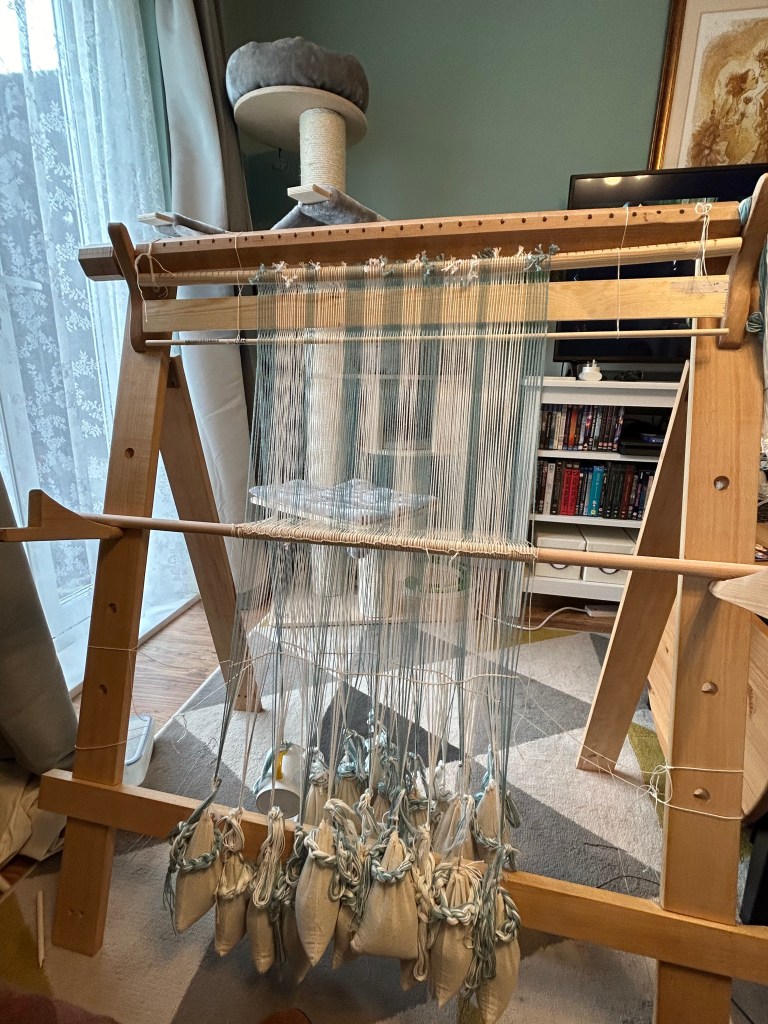
After removing my first weaving attempt from my loom, I set it up to try again using the remaining warp. I know that it isn’t always necessary to actually cut the warp but the width had narrowed in so much that it looked like it was going to be a pain to keep the threads spreads out where I wanted them.
I suspended a thick dowel rod from the warp-bar and tied each warp thread to it. I then used a slat and another smaller dowel to help me space out the warp threads before I started weaving. There was no real reason for what I used, I just happened to have them around.
My weights were about 325g each, which were tied to 12 warp threads, which is about 27g per thread.
After weaving a couple of centimeters, the warp threads started to pull in again. After doing some research I realized that there is indeed a reason for using a weaving comb to beat up the weft thread into place. In an article I read, the authors (Cooke et al. 2002) mention that the weaving comb helps to mitigate the effect of the warp threads under tension. These can actually pull on the weft, which results in the warp moving towards the center. Up until this point, I had just been using the sword beater to move the weft thread into place.
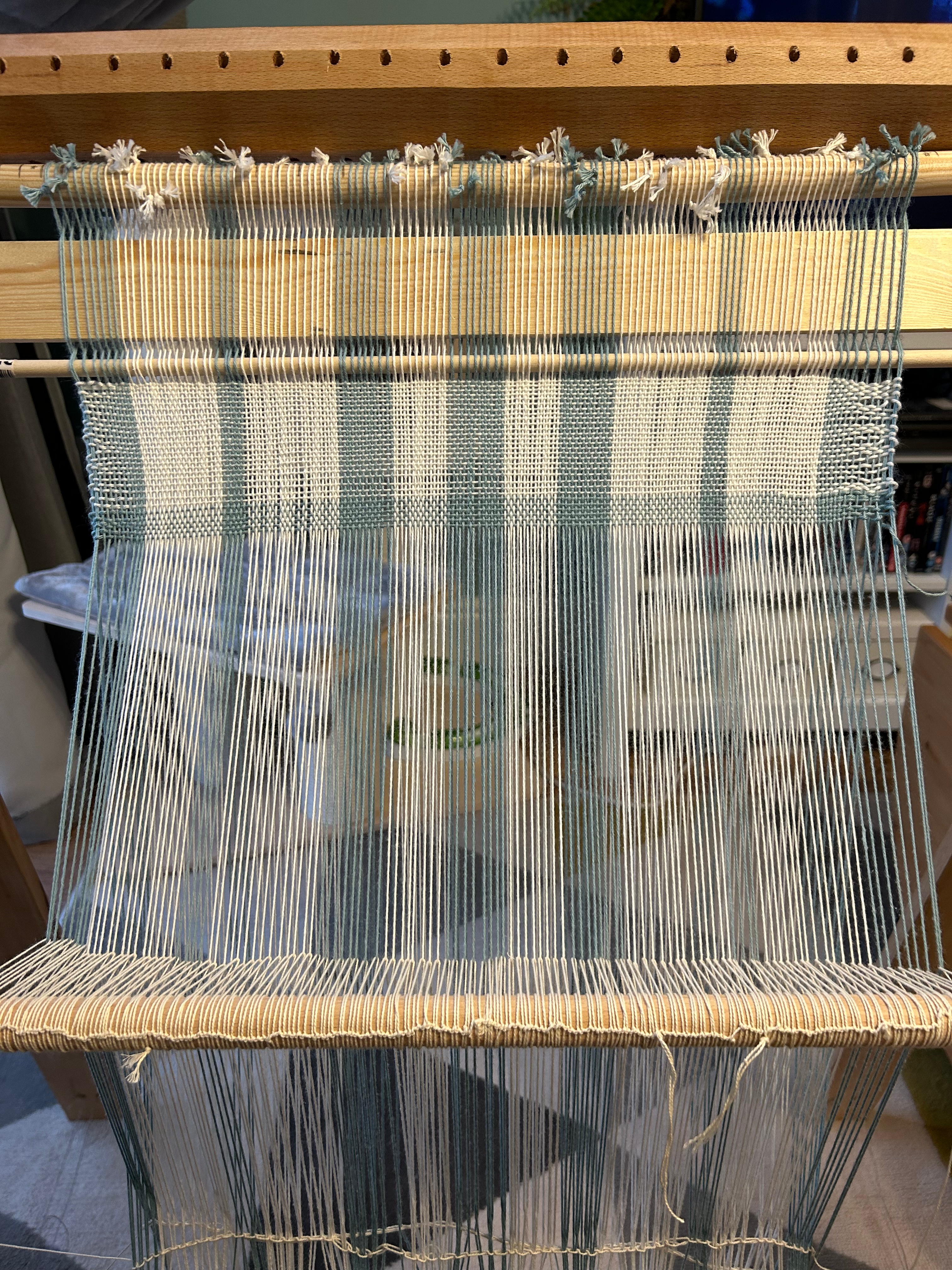
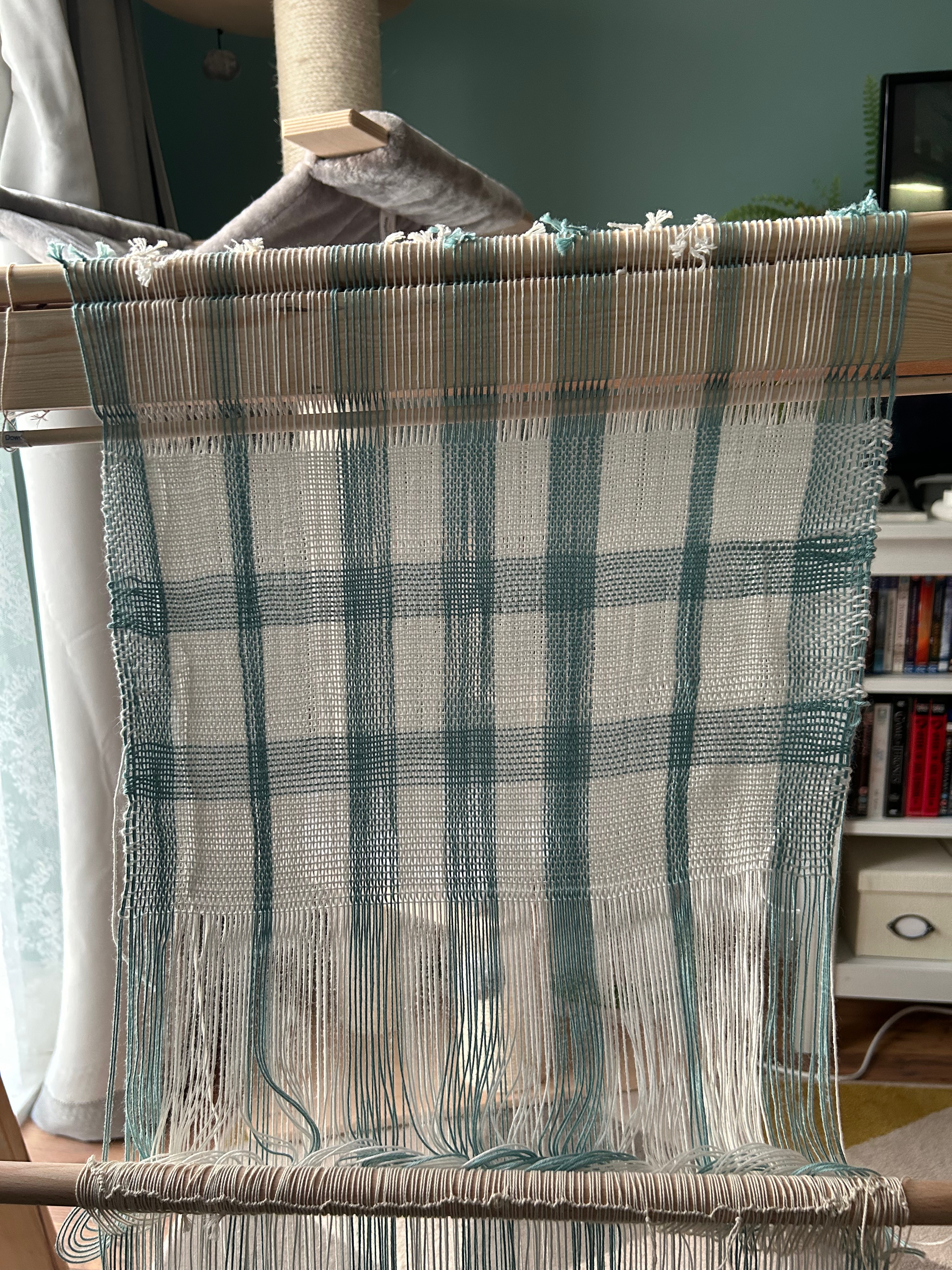
I unpicked what I had woven already and started again, this time with a plan to use a weaving comb to move the weft thread. My weaving comb, unfortunately, was just a fork! It was the only thing I could think of at the time that might work…and it did actually (kind of) work. I also increased the size of my weft bubble. The warp threads still pulled in but it wasn’t nearly as bad as it was. I was able to use a darning needle to manipulate the warp threads into place when they did move, which did fix the problem.
Weaving Test 3
Eventually I reached a point where it just didn’t look like the weaving in Test 2 was getting better, so I decided to start a new sample…this time just using some sticks to create a gap in the warp.
While weaving, I decided to increase the size of my weft bubble to see if that fixed the warp thread problem.
It did not.
What it DID do, was make my selvedges get really untidy and the fabric had some puckering, but really the whole thing just looked like a mess! I went back to the same size bubble I started with and it looked much better.
Weaving Test 4
I still had some warp that I could use up, so I decided to try something new. I wanted to see if I increased the heaviness of my weights, whether that would affect my woven fabric.
I increased my weights to 475g, which equated to about 40g per thread. My approach with adding each pick was the same with the previous tests: one big weft bubble, fork used to move the weft into place, beat with the sword beater.
I only wove a small sample to assess the effect of increasing the size of the weights. I wasn’t convinced that there was much of a difference and definitely not a noticeable improvement!
Results
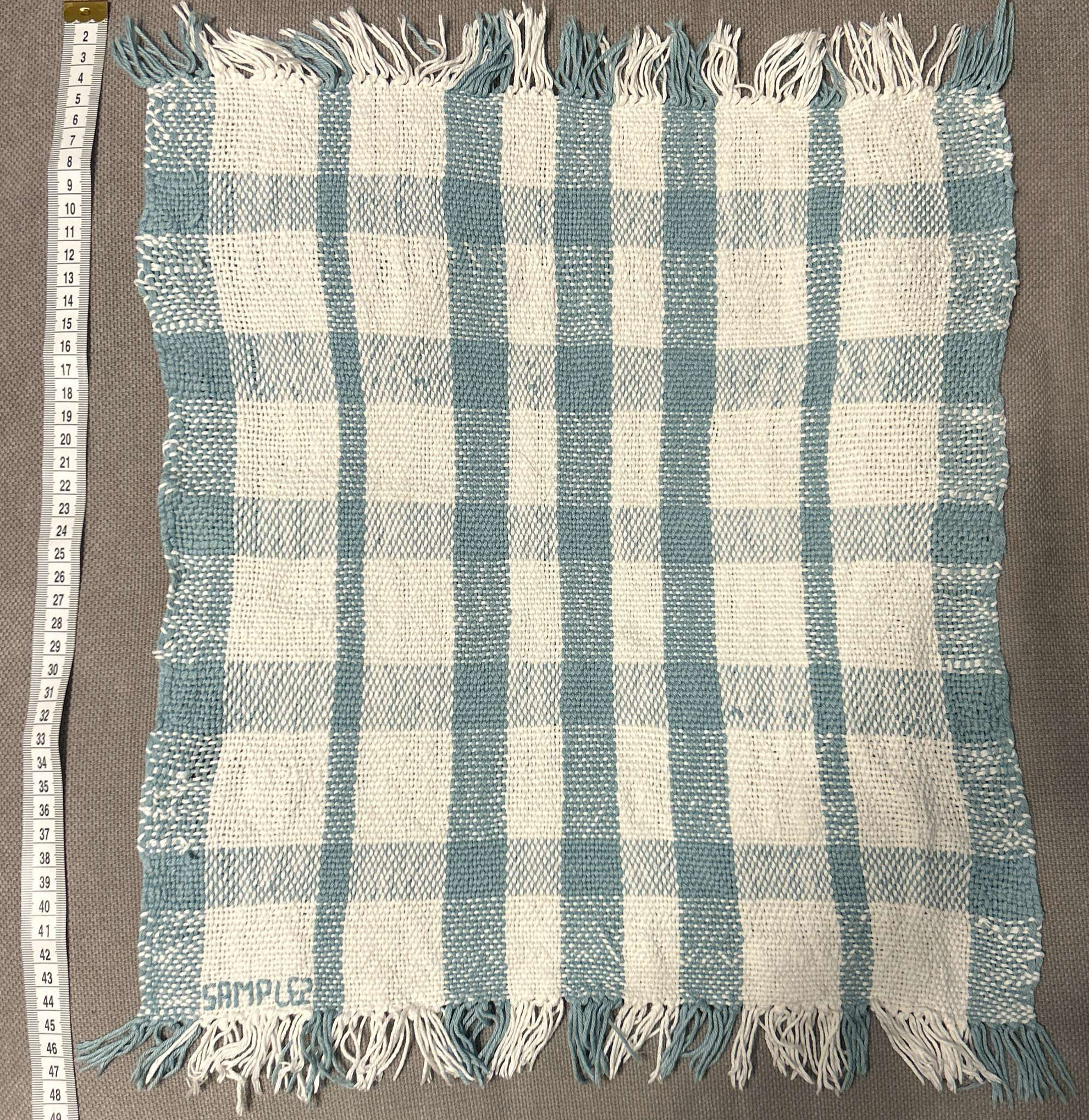
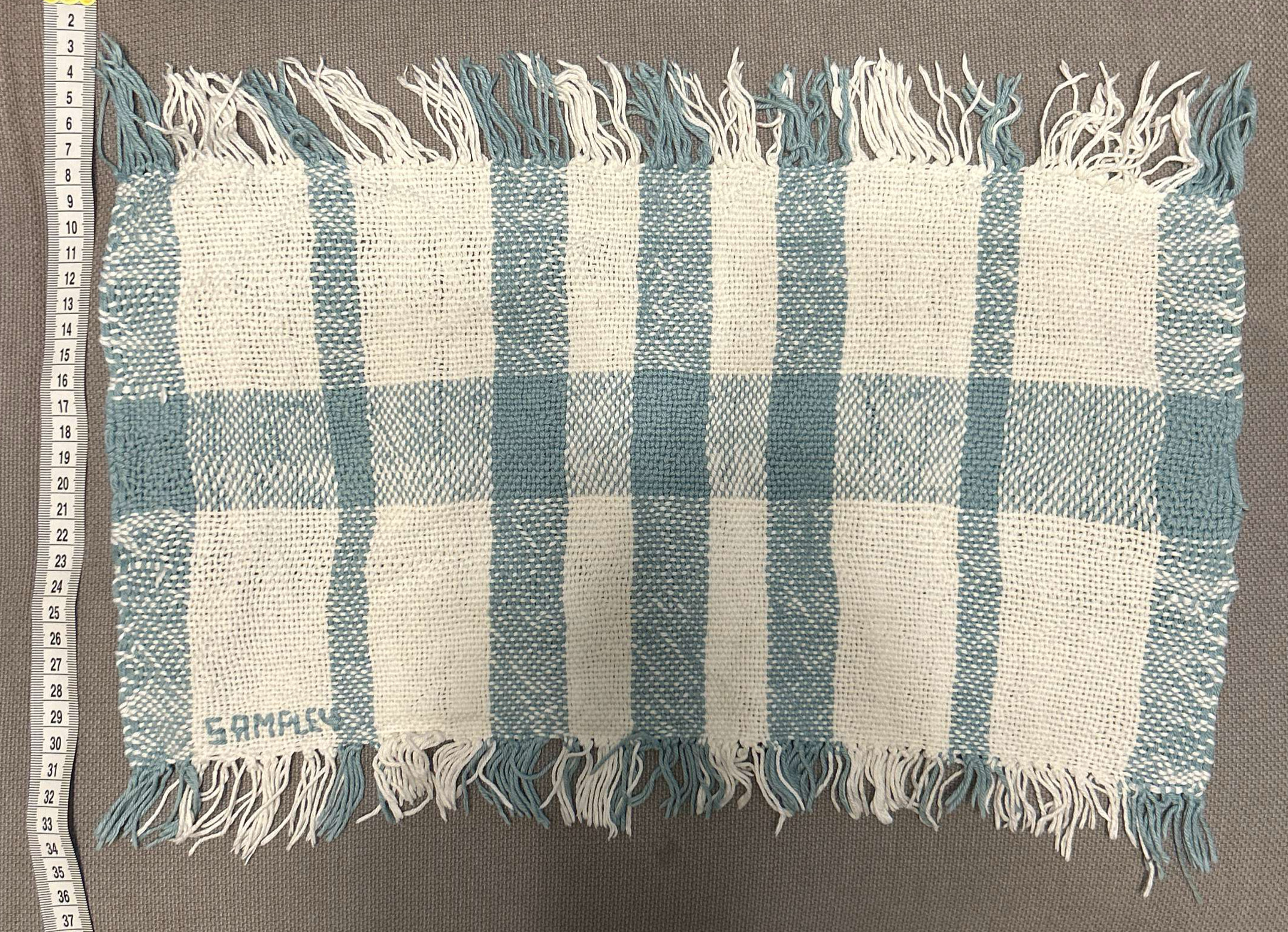
I measured each sample before washing and after washing but I’m only including the post-washing results below.
Sample 2
Change in width from top to bottom: -0.8cm
Thread count at middle-middle: 7.0/cm warp x 3.7cm weft
Sample 3
Change in width from top to bottom: +1.2cm
Thread count at middle-middle: 3.3/cm warp x 3.4cm weft
Sample 4
Change in width from top to bottom: -2.4cm
Thread count at middle-middle: 3.5/cm warp x 3.4cm weft

Conclusions
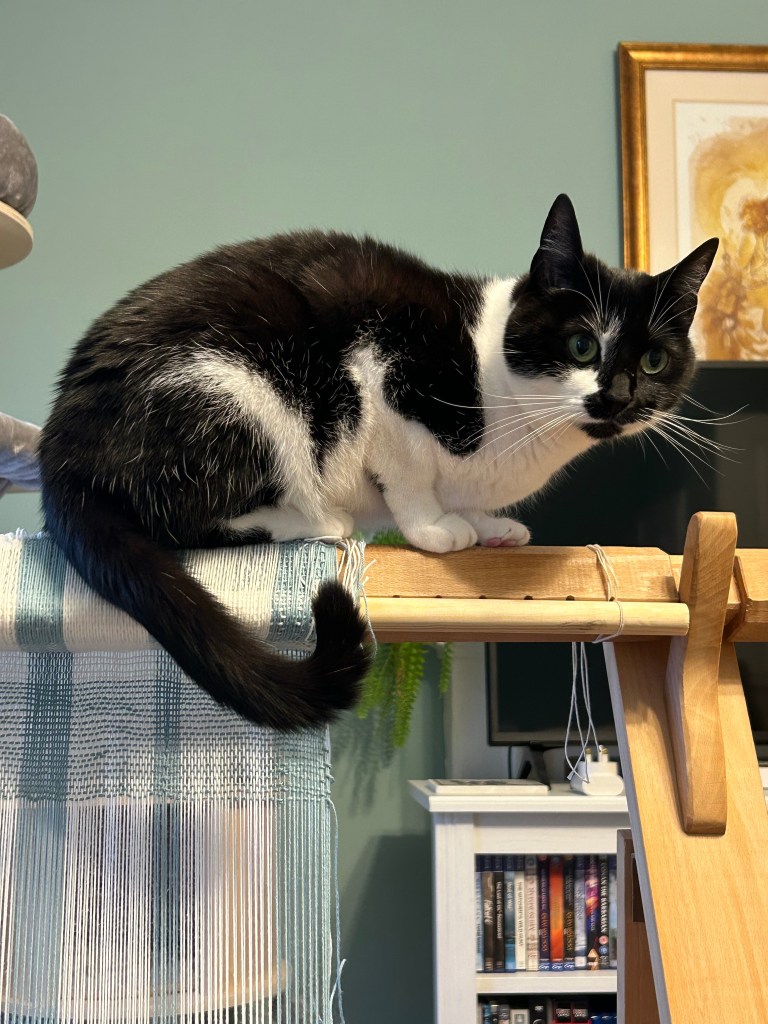
I learned a lot from the whole process of tying on the warp, set up, weaving, and trouble shooting. As someone that doesn’t have much experience with weaving prior to this, I am having to learn the basics of the craft as I go. I don’t have much to compare this experience with, which I can see being a benefit but it is also means that I don’t have a wealth of pervious experience to draw on when problem solving. However, I am determined to learn how to weave on my warp weighted loom and I want to see how far I can push it to make some truly spectacular fabrics.
References
Cooke, W.D., Banks, K., Hammarlund, L. 2002. Fabric width control and sett in warp-weighted loom weaving, Archaeological Textile Review 35, 2-6.
 Ancient Textile Craft
Leave a comment